Published: 11/07/2025
Miloš Šejn - Ani labuť ani Lůna
Unexpected Art Connections: A Reflective Journey Through Litoměřice
Date: 6. 6. 2025 – 28. 9. 2025
Place: kostel Zvěstování Panny Marie, Jezuitská ul.
Our rating: ★★★ (3/3) — EXCELLENT
On a quiet bank holiday, we wandered through the charming streets of Litoměřice, a picturesque Czech town where history whispers from every corner. The peaceful atmosphere invited us to slow down and absorb the beauty around us—intricate architecture, vibrant building facades, and centuries of stories embedded in stone.
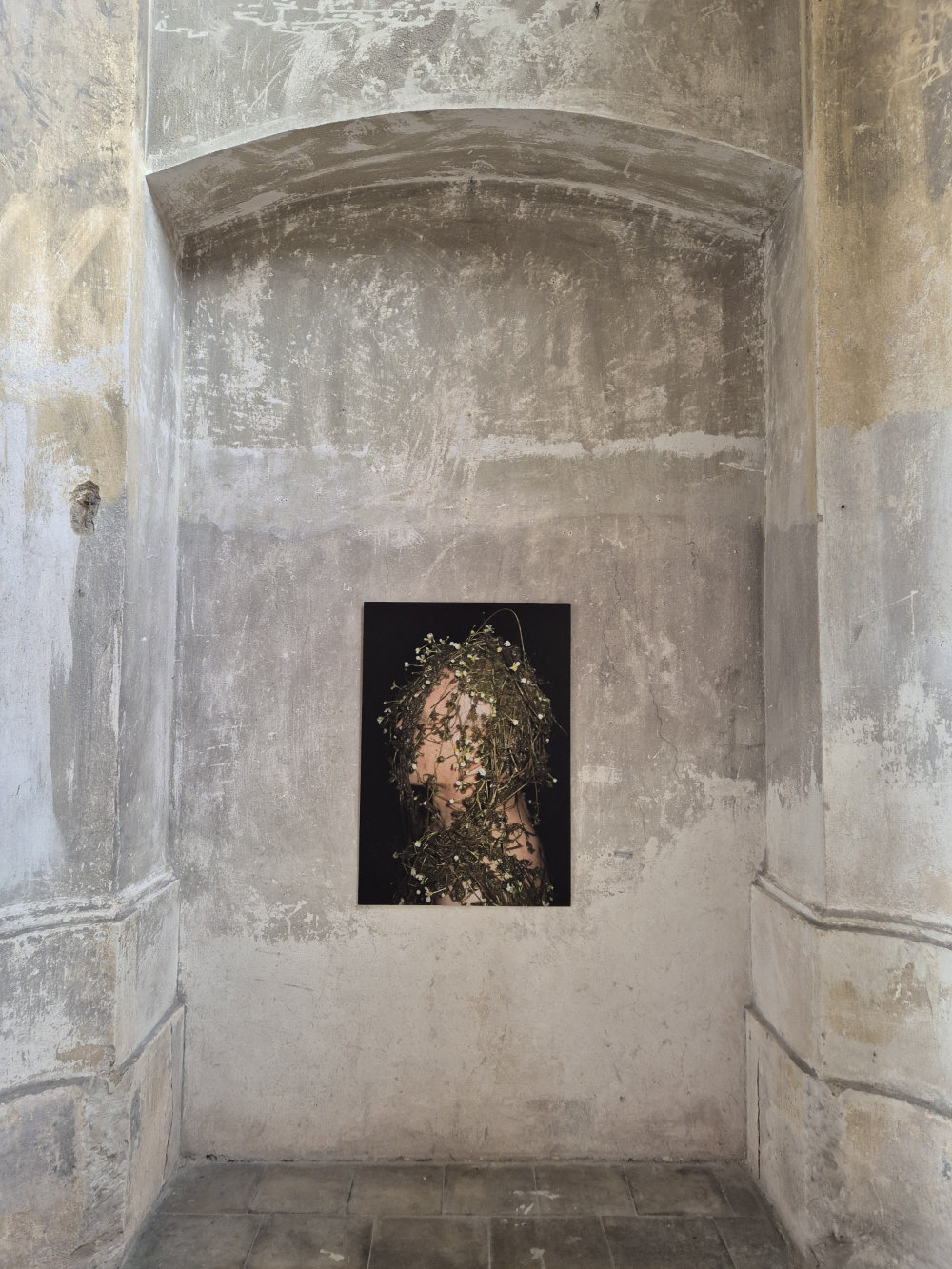
After exploring the city center, we sought refuge in one of the town’s lush parks. It was there, amid the tranquility, that we stumbled upon something unexpected: an exhibition featuring the work of Czech artist Miloš Šejn. His “Ani labuť ani Lůna” installation (meaning “Neither Swan nor Moon/Womb”), was housed in a secularized Baroque church. This site-specific work creates a profound dialogue between art and environment, with the church itself becoming part of the artistic expression.
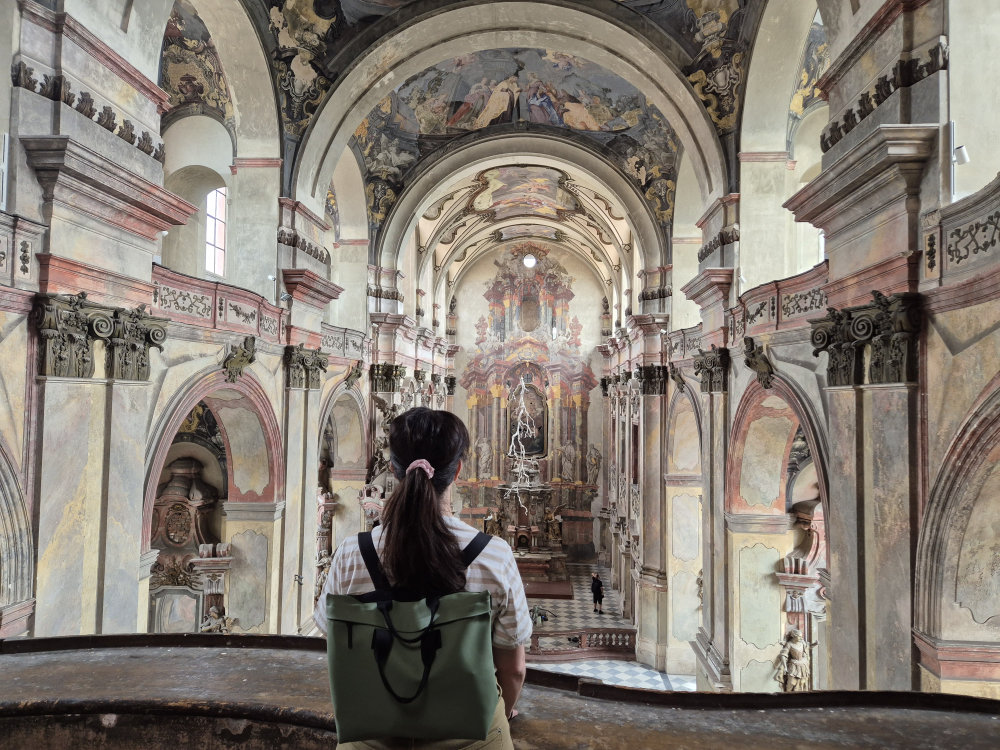
What struck us most was Šejn’s deep connection to nature. Using natural pigments, water, textiles, and metal relics, he created an immersive experience that evoked the landscapes of the Bohemian Paradise region. The installation also incorporated video and sound elements, creating a conversation between the physical and ephemeral.
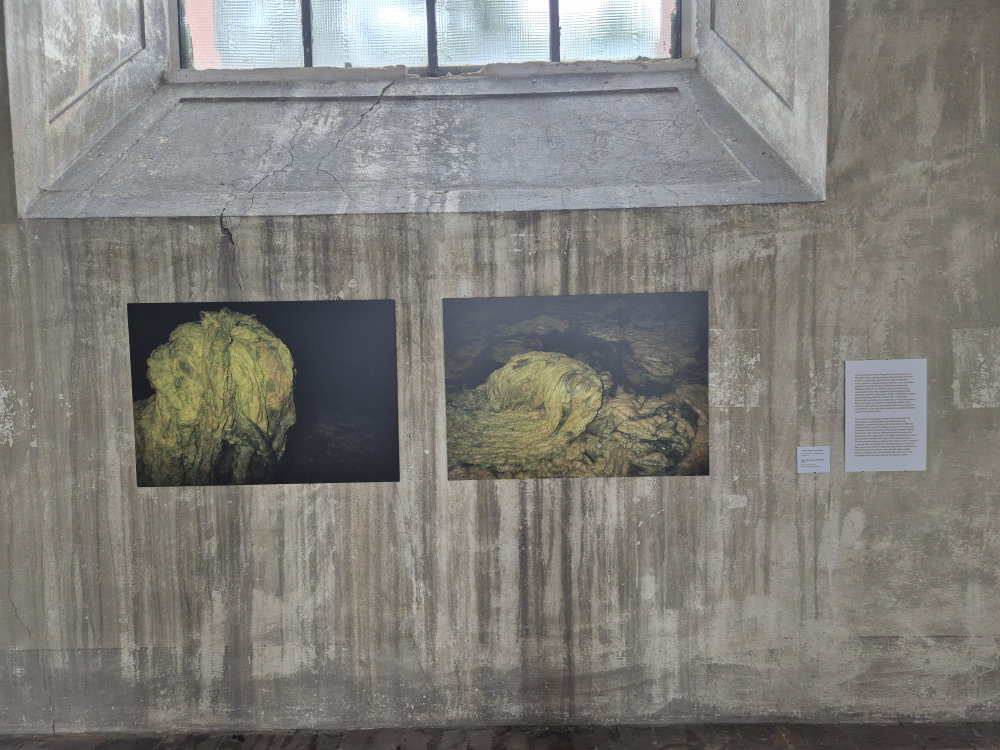
The work references Czech Romantic poet Karel Hynek Mácha, exploring themes of historical memory and our romanticized relationship with nature. Rather than simply displaying objects, Šejn invites viewers into a meditative experience that engages multiple senses.
Connecting to Pistoletto’s “Venus of the Rags”
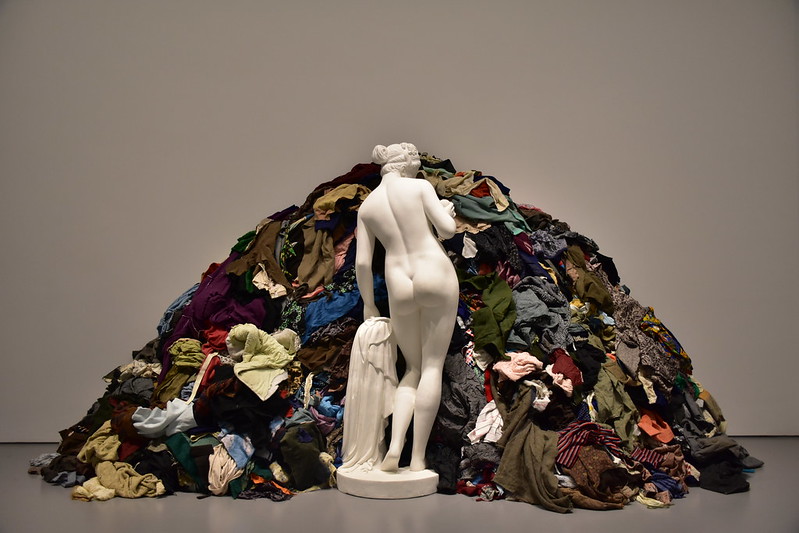
Venus of the Rags by Michelangelo Pistoletto 3
” by Amaury Laporte,
CC BY 2.0
As I experienced Šejn’s installation, my mind drew an unexpected parallel to Michelangelo Pistoletto’s famous “Venus of the Rags” (1967), a cornerstone of the Italian Arte Povera movement. Pistoletto’s piece juxtaposes a classical marble Venus statue—representing idealized beauty and artistic tradition—with a colorful pile of discarded rags. This stark contrast between the “high” art of classical sculpture and the “low” everyday materials creates a powerful commentary on consumerism and waste in modern society.
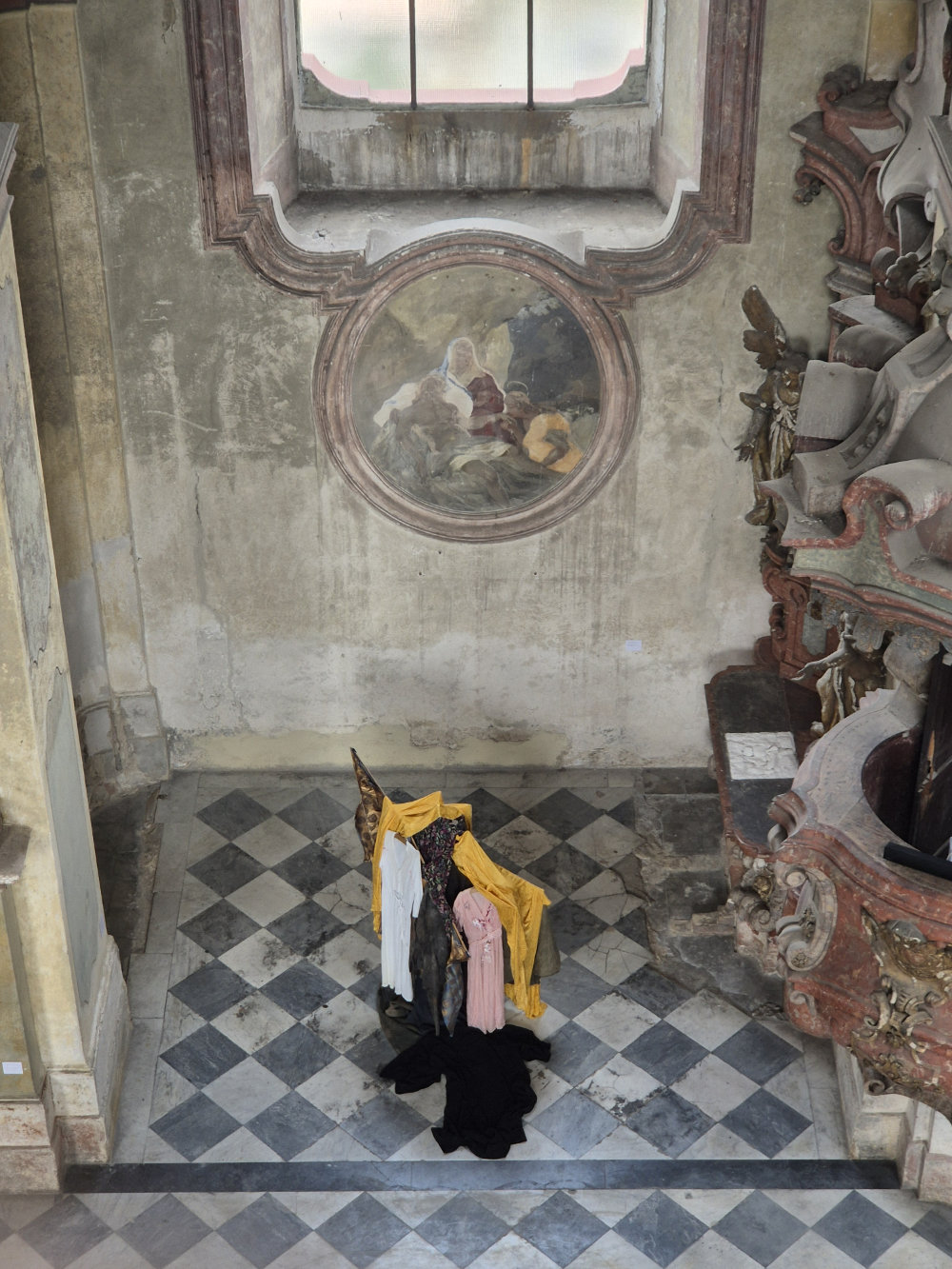
Miloš Šejn - Ani labuť ani Lůna
“Art must go beyond the limitation of the object, of the so-called artistic product (while considering it to be of fundamental importance), in order to be active in every situation and place of planetary life.”
Two approaches, shared depths
Though created in different contexts, these works share fascinating connections. Both artists use humble materials to create profound statements. Šejn’s natural elements connect viewers to earth, history, and spirituality, while Pistoletto’s rags transform everyday waste into a critique of consumer culture. Their relationship with history differs significantly. Šejn engages respectfully with Romantic traditions and Czech heritage, seeking to reveal timeless connections between humans and nature.
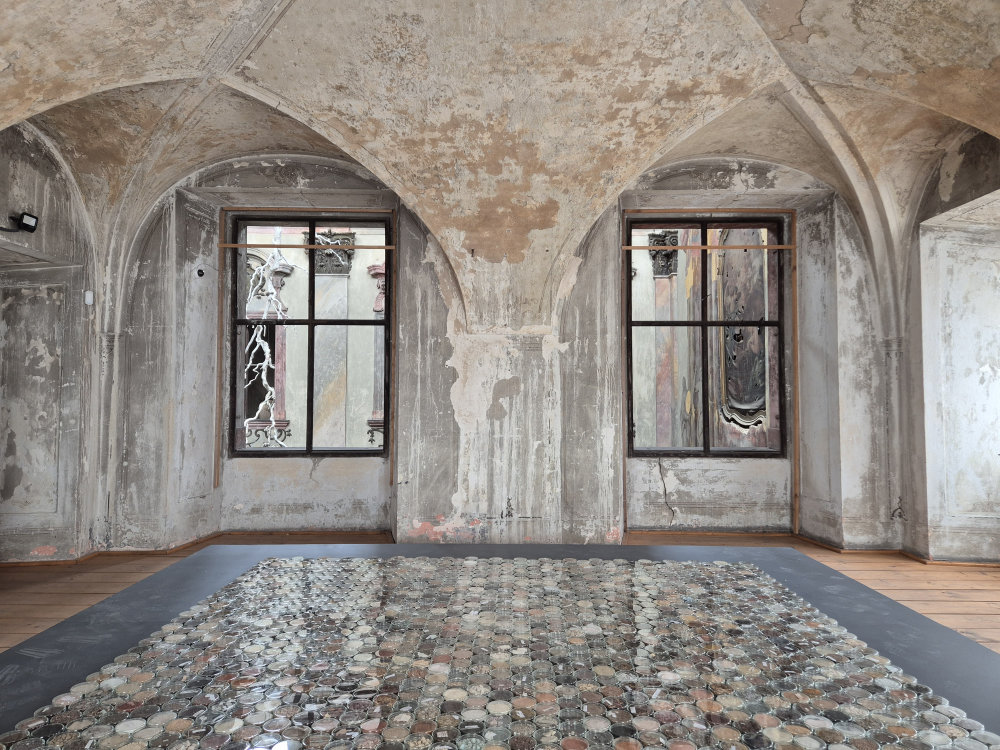
Pistoletto, meanwhile, confronts classical art history more directly, subverting its authority by placing Venus amid discarded fabrics. What truly connects these works is their ability to transform simple materials into rich experiences. Šejn creates a space for contemplation and reconnection with nature’s spiritual dimensions. Pistoletto challenges us to question our values and the very definition of art itself.
Finding Meaning in Unexpected Places
Our spontaneous discovery in Litoměřice reminded us why travel matters. We arrived with no agenda beyond absorbing the town’s atmosphere, yet found ourselves engaged in a meaningful artistic dialogue that spanned countries and artistic movements. Both Šejn and Pistoletto, in their distinct ways, ask us to look beyond surface appearances and reconsider our relationship with materials, history, and the spaces we inhabit. Sometimes the most profound connections emerge when we simply allow ourselves to wander and wonder.
Follow us on Instagram to get the latest updates!